Sarasota Tree Service & Clearing
Get professional Sarasota tree services with ISA Certified Arborists adhering to ANSI A300 and Z133 protocols. Our team provides science-driven pruning services, comprehensive risk assessments (TRAQ), and storm preparation specifically designed for local wind conditions, salt exposure, and sandy soils. We ensure compliance with local permits, DBH requirements, coastal setbacks, and HOA guidelines, while maintaining complete tree-specific insurance coverage including general liability, workers' compensation, and commercial auto. Rely on expert defect identification, strategic crown reduction, expert cabling, careful tree removal, and safe stump grinding—fully recorded with visual documentation and professional equipment. Understand how proper scheduling, IPM, and regular maintenance reduce safety concerns and long-term costs.
Main Insights
- Certified ISA Arborists offer coastal-ready arboricultural services following ANSI A300 standards, assessing wind exposure, saline soil conditions and structural integrity of trees in Sarasota.
- Complete permit management: handle and confirm ePermits, DBH requirements, coastal setback regulations, HOA authorizations, and endangered species evaluations; urgent safety exemptions documented and supported with certified arborist documentation.
- Detailed risk analysis following TRAQ protocols, including photo documentation, decay analysis, and risk matrices to prioritize necessary tree maintenance actions.
- Specialized pruning and growth optimization: featuring crown reduction, clearance cuts, and structural pruning to decrease wind pressure, stop potential breakage, and maximize canopy longevity.
- Our professional and fully compliant staff adhere to comprehensive safety standards, including OSHA safety standards, employee coverage, tree-specific insurance coverage, underground utility location, and detailed equipment maintenance logs to minimize risk.
Why Certified Arborists Matter in Sarasota's Coastal Climate
Due to Sarasota is situated on a salty, storm-prone coastline, certified arborists are essential in maintaining tree health and reducing risk to structures and residents. You receive value from professionals experienced in analyzing structural integrity, salt content, and wind vulnerability using ANSI A300 standards and ISA best practices. They choose species with demonstrated salt resistance, facilitate seaside adaptation, and confirm root zone aeration in packed, sandy ground. They also assess canopy density for storm resistance and spot defects like structural weaknesses, embedded bark, and damaged root foundations.
You'll receive research-backed guidance supported by local site data: foliage chloride measurements, soil salinity measurements, and species performance records. Professional guidance enables you to prevent incorrect pruning, soil maintenance issues, and inappropriate plant choices that elevate failure rates when facing extreme conditions.
Critical Tree Services for Safety and Health
You safeguard people and property when you schedule regular pruning that strengthens overall structure, maintains proper clearance, and minimizes wind throw potential. You further decrease potential liability by employing formal hazard assessment protocols-ANSI A300/ISA TRAQ-to assess structural issues, impact zones, and needed corrections. Finally, you manage pathogens and pests through regular inspection, precise identification, and evidence-based treatments (sanitation, targeted biocides, and IPM) aligned with Sarasota's seasonal challenges.
The Value of Routine Pruning
Scheduled pruning goes beyond improving aesthetics-it reduces structural issues, removes diseased or crossing branches, and improves wind-load distribution to lower the risk of failure during storms. You'll furthermore maintain clearance over structures, sidewalks, and service lines, reducing contact points that lead to abrasion and decay. Proper canopy thinning improves light and air circulation, decreasing leaf wetness duration and presence of foliar pathogens. Appropriate branch spacing and selective cuts support stronger attachment angles, minimizing co-dominant stems and future splitting. Timing matters: prune during dormancy or after peak growth flush to minimize stress and pest attraction. Use ANSI A300 standards and sharp, sanitized tools to produce small, clean wounds outside the branch collar. With periodic intervals, you increase service life, maintain form, and reduce costly emergency interventions.
Safety Assessment Protocols
Pruning establishes the structure; hazard assessment confirms that framework functions safely under real-world loads. You start with a comprehensive assessment protocol: tree type classification, trunk size, crown architecture, imperfections (fissures, cavities, co-dominant stems), root system health, inclination, and target occupancy beneath. You capture through pictures, diameter measurements, and percussion tests. For premium locations, you add resistograph or sonic tomography to measure wood deterioration and determine structural integrity.
Subsequently, you implement a risk matrix that combines risk probability with potential consequences, taking into account Sarasota's weather patterns and soil characteristics. You then determine risk reduction strategies: tree crown reduction specifications, cabling/bracing specs (ANSI A300), pruning for utility clearance, or removal if residual risk stays intolerable. Finally, you schedule periodic assessment timeframes based on seasonal changes and growth patterns.
Managing Pests and Diseases
How do you maintain Sarasota's trees strong and resilient when harsh weather and environmental factors amplify harmful organisms? You implement systematic observation with regular assessments, individualized tolerance levels, and scientific analysis for rapid pathogen identification. You track vectors like ambrosia beetles, scale, and psyllids, and look out for early signs-disease symptoms and tissue damage, tree secretions and pest evidence.
Prioritize sanitation pruning with sterile protocols, clear away diseased debris, and prevent wounding. Deploy biological controls including biological fungicide solutions, beneficial nematodes, and parasitoids where evidence supports efficacy. Use targeted, labeled chemistries-systemic injections for vascular diseases, specialized pest treatments-only when action thresholds are met. Calibrate equipment, observe re-entry intervals, and preserve pollinators. Improve tree vigor with proper soil management, proper fertilization, appropriate watering, and mulch to minimize stress-driven susceptibility.
Home Safety Evaluations and Risk Prevention Strategies
Begin by identifying high-risk trees using objective indicators such as lean angle, top decay, proximity to structures, and site conditions characteristic of Sarasota's coastal winds and saturated soils. Next, evaluate structural defects-root plate instability, embedded bark, internal voids, weak unions, and decay-using observable signs and, when warranted, instruments like a mallet, probe, or resistance drill. Subsequently plan remediation with proven approaches: pruning to decrease sail and load paths, reinforcement per ANSI A300, strategic elimination of unacceptable risks, and scheduled monitoring aligned with storm season.
Recognizing Hazardous Trees
Despite a tree's healthy appearance, specific red flags can indicate a high risk of failure and potential damage. First check the base: watch for soil uplift, recent ground swelling, or visible root damage-common following building projects or major storms. Examine the root flare for rot and be alert for fungal growths or unusual odors. Inspect the trunk for recent bark damage, seeping sap, or abrupt tilting after significant rain.
Inspect the crown structure with restricted visibility by employing binoculars at different viewpoints and varying daylight hours. Browned leaves outside normal seasons, sparse foliage, or numerous dead twigs suggest tree stress. Watch for tree deterioration subsequent to watering changes or exposure to salt. Document results, capture images of changes, and arrange a certified arborist's Level 2 visual evaluation, particularly before hurricane season begins.
Overview of Structural Defects
Though trees often seem sturdy, structural defects commonly hide serious flaws that raise the risk of failure when exposed to storms, precipitation, or saturated ground. Be alert to codominant stems with tight V-shaped unions, bark inclusions, and structural splits. Hollow cavities, longitudinal splits, and excessive leans point to unstable support. In the crown, dying branches indicate overall health issues or circulation disruption. At ground level, buttress asymmetry, fungal conks, and soil heaving suggest root deterioration or foundation instability. Bark death, seeping sap, and cutting injuries often hide deterioration. Storm-prone Sarasota soils and intermittent flooding amplify problems by reducing root anchorage and intensifying strain on compromised areas. Document all issues, evaluate threatened objects beneath the tree, and prioritize inspections following severe weather events.
Risk Management Approaches and Strategy
Given how Sarasota's weather and soil conditions raise potential tree problems, establish a comprehensive protection strategy that combines regular assessments with targeted interventions. Start with an experienced arborist's Level 2 visual inspection; escalate to technical evaluations like resistograph testing, acoustic scanning, or root collar examination when structural concerns, lean, or girdling roots are detected. Prioritize elimination or cabling/bracing based on risk assessment scores (likelihood x consequence). Reduce wind load through ANSI A300 pruning standards, preserve 2-4 inches of protective mulch, and improve drainage to decrease root decay potential.
Record targets, failure paths, and trigger thresholds for response. Incorporate evacuation protocols for high-consequence zones near bedrooms, driveways, and utilities. Arrange post-storm re-inspections. Coordinate funding strategies with risk levels: allocate funds for regular upkeep, set aside funds for urgent clearing, and use grants or insurance where eligible.
Weather Emergency Planning, Response, and Cleanup Services
When severe weather looms near Sarasota, lower your vulnerability by strengthening your trees and creating a response plan. Put together storm kits with medical equipment, flashlights, and chainsaw safety gear. Chart out evacuation routes, install flood protection to protect root zones, and schedule utility inspections to ensure safe distances from utility lines and service drops. Record tree information, noting species, issues, and vulnerable points to identify required actions.
Once watches are posted, secure any loose yard items, bring down hanging decorations, and park automobiles clear of hazard areas. During severe weather, remain sheltered inside; avoid using power tools in strong winds or around energized wires. Once conditions improve, conduct a thorough inspection: check for uprooted trees, examine for trunk damage, look for suspended limbs, and check ground stability. Consider all fallen lines energized. Reach out to certified arborists for controlled tree management, proper felling, and waste removal.
Professional Pruning, Trimming Strategies, and Growth Maintenance
Since appropriate pruning defines form and minimizes hazards, you approach precision pruning with specific goals, proper timing, and precise methods. You locate target branches at the collar and branch bark ridge, then perform three-cut removals to avoid tearing. You emphasize crown balancing to enhance wind resistance and spread weight, using selective thinning to decrease mass while avoiding over-thinning. You maintain scaffold hierarchy, keep 30-45% live crown ratio on shade trees, and respect species-specific responses common in live oak, sable palm, and laurel oak of Sarasota.
Schedule pruning during dormancy or after flush hardening to minimize stress, ensuring sanitized tools between trees, and restricting annual canopy removal to 20-25%. Don't practice harmful practices like topping, flush cuts, and excessive raise-pruning that produces weak sprouts. Record defects, track regrowth, and create maintenance intervals.
Essential Safety Practices for Tree Removal and Stump Grinding
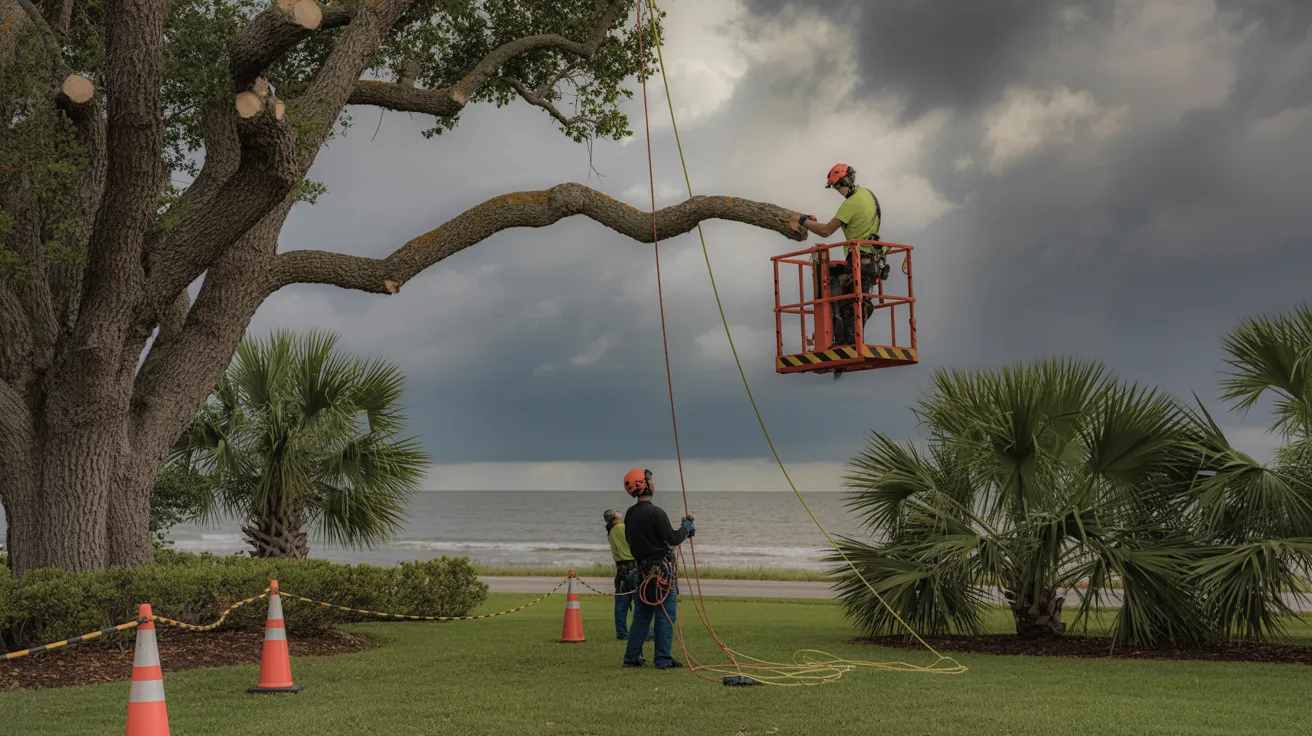
Although tree removal is a final option, you approach the task with a safety-first approach: conduct a thorough risk assessment (evaluating targets, lean, defects, decay class), assess how different species typically fail common in Sarasota winds, and set up drop zones and exclusion perimeters. Select the approach - crane, rigging, or sectional dismantling - according to load paths, tie-in points, and canopy weight distribution. Conduct pre-job briefings to align roles, hand signals, and escape routes. Emphasize crew training in chainsaw operation, aerial lift rescue, and rigging physics. Enforce PPE: safety helmet, hearing/eye protection, protective chaps and ANSI Z133-compliant climbing systems. Schedule equipment maintenance; inspect ropes, carabiners, saw chain tension, and hydraulic lines before each cut. For stump grinding, identify utilities, set up shields, manage chips, and ensure proper backfill and grade.
Key Permits, Regulations, and Insurance Considerations
When planning tree-related work in Sarasota, there are important rules to consider, making it essential to verify all necessary permits, conservation status of species, and access restrictions before beginning work. Initially verify permits via Sarasota County's ePermit portal or your municipal authority; note species of trees, diameter at breast height (DBH), and location relative to boundary setbacks and coastal regions. Confirm any applicable exemptions (including urgent risk verified by an arborist) before beginning. Examine Florida's protected and invasive species listings to prevent infractions.
Validate proper licensing and OSHA compliance requirements. Request written proof of insurance: current general liability for tree work, workers' compensation, and commercial vehicle insurance. Make sure certificates get provided straight from the insurance company with you listed as certificate holder and confirming coverage limits and endorsements (CG 20 10/20 37 where applicable). Check utility line clearances with 811 and secure HOA permission where required.
Understanding the Cost Savings of Preventive Maintenance
Regular tree inspections and pruning contribute to lowering failure risk, reducing lifecycle costs, and extending canopy service life. This helps catch defects early on - such as cracks, decay columns, plus co-dominant stems - before they develop into costly removals, emergency situations, or damage to assets. Proactive maintenance coordinates effectively with long-term financial planning by transforming unforeseen, major expenses into planned, budget-friendly maintenance tasks.
You also boost tree vitality metrics that impact stability. Root zone aeration alleviates compaction, improves oxygen diffusion rates, and boosts fine-root density, enhancing water and nutrient uptake. Strategic nutrient application and mulch management promote balanced growth, minimizing hazardous limb weight. Structural pruning creates strong branch architecture, reducing storm breakage.
Detailed maintenance histories minimize potential issues by demonstrating responsible management and adherence to ANSI A300 and ISA BMPs. In the long run, costs decrease, and your trees thrive more.
Picking the Best Tree Care Professional in Sarasota
Prior to letting anyone touch your trees, ensure you confirm their qualifications, insurance status, and compliance with industry standards. Request documentation of their ISA Certified Arborist credentials, together with a comprehensive safety program and valid insurance certificates covering general liability and workers' compensation. Validate their permits with Sarasota or Florida authorities. Evaluate their expertise concerning ANSI A300 pruning standards and ANSI Z133 safety requirements.
Request a location-based safety evaluation and a written scope covering: site entry, falling object areas, rigging techniques, site cleanup, and waste removal. Require certified equipment evaluations and traffic and pedestrian safety protocols when working near roads. Evaluate various quotes, but avoid unusually low quotes that skip safety controls.
Check customer feedback for trends in timeliness, reported damages, and emergency response. Require recommendations and validate comparable work in your local area.
Frequently Asked Questions
How Do Tree Services Handle Wildlife Protection During Work?
Yes. Professional tree services incorporate wildlife habitat conservation into operations. You'll find habitat evaluation before work begins to identify wildlife dwellings and shelters. They implement seasonal timing to prevent disruption during breeding periods and employ certified wildlife relocation when necessary. Crews use protected areas, gentle equipment techniques, and directional felling to safeguard microhabitats. They document findings, adhere to Migratory Bird Treaty Act and state rules, and coordinate with licensed wildlife specialists. Ask for documentation of procedures, certifications, and follow-up practices.
Are Quiet Hours Accommodated for HOA Communities?
Absolutely, it's possible to arrange quiet hour timing with service teams. Studies show electric saws cut perceived noise by up to 20 dB, a substantial drop in sound energy. You'll specify HOA windows, and the crews will deploy noise minimization techniques: battery saws, manual operations, rubber chutes, and staged chipper runs after quiet hours. Crews will evaluate for safety, mark high-risk cuts, and sequence operations to limit impulse noise. Document time frames in the work order and specify decibel targets.
Do You Offer Eco-Friendly Disposal and Wood Recycling Solutions?
Indeed. We offer green disposal solutions and timber recycling. Workers carefully divide uncontaminated timber for processing, chip branches for on-site mulch production, and turn remaining materials into organic matter. Larger hardwood logs may be repurposed for habitat structures. Where applicable, they can organize biochar creation using controlled, low-oxygen burns that meet air-quality standards. Experts analyze wood varieties, contamination risks, and humidity to prevent pathogen spread and guarantee safe handling, transport, and labeling of repurposed materials.
Can Companies Provide Digital Tree Inventory and Mapping Services?
Indeed. Many arboricultural companies offer comprehensive digital tree surveying services. You'll be provided with geographic information system maps, containing geo-tagged tree positions, species identification, DBH measurements, condition assessments, and hazard assessments. They collect data with handheld survey devices, aerial platforms, and LiDAR where allowed, then provide geographic data files and web interfaces. You can schedule essential work, track regulatory adherence, and assess canopy development. Request information regarding qualified tree care professionals, QA procedures, and industry specifications (like ANSI A300, ESRI geodatabases) to ensure safety and accuracy.
Is Consultation for Drought-Resistant Plant Selection Part of the Service?
Yes, we provide comprehensive guidance on drought-tolerant plant selection. We conduct thorough site assessments analyzing soil characteristics, directional exposure, and microclimate patterns. Species recommendations are made using area-specific performance metrics and offer strategic placement advice for root systems and crown spread. We develop comprehensive drought-resistant planting strategies with strategic water-use zones, custom mulch guidelines, and phased establishment watering plans. We provide water-conscious care protocols including observation protocols, pruning techniques to minimize water loss, soil hydration guidelines, and watering schedules following ISA check here standards to maximize plant survival, minimize potential issues, and maintain water efficiency.
Final Overview
You've seen how certified arborists keep Sarasota's coastal trees strong and protected. Be sure to focus on routine checks, careful trimming, and risk mitigation before severe weather. One key statistic: a mature live oak can reach 50,000-100,000 pounds-so safe handling procedures and ANSI Z133 standards are mandatory, they're critical for safety. Make sure to check ISA credentials, required documentation, and $1M+ liability/worker's comp. Plan preventive care to prevent dangerous situations and skip crisis premiums. Choose providers who offer comprehensive inspections, documented safety procedures, and post-storm protocols to protect your investment and wallet.